Oncotherm - Oncothhermia Systems
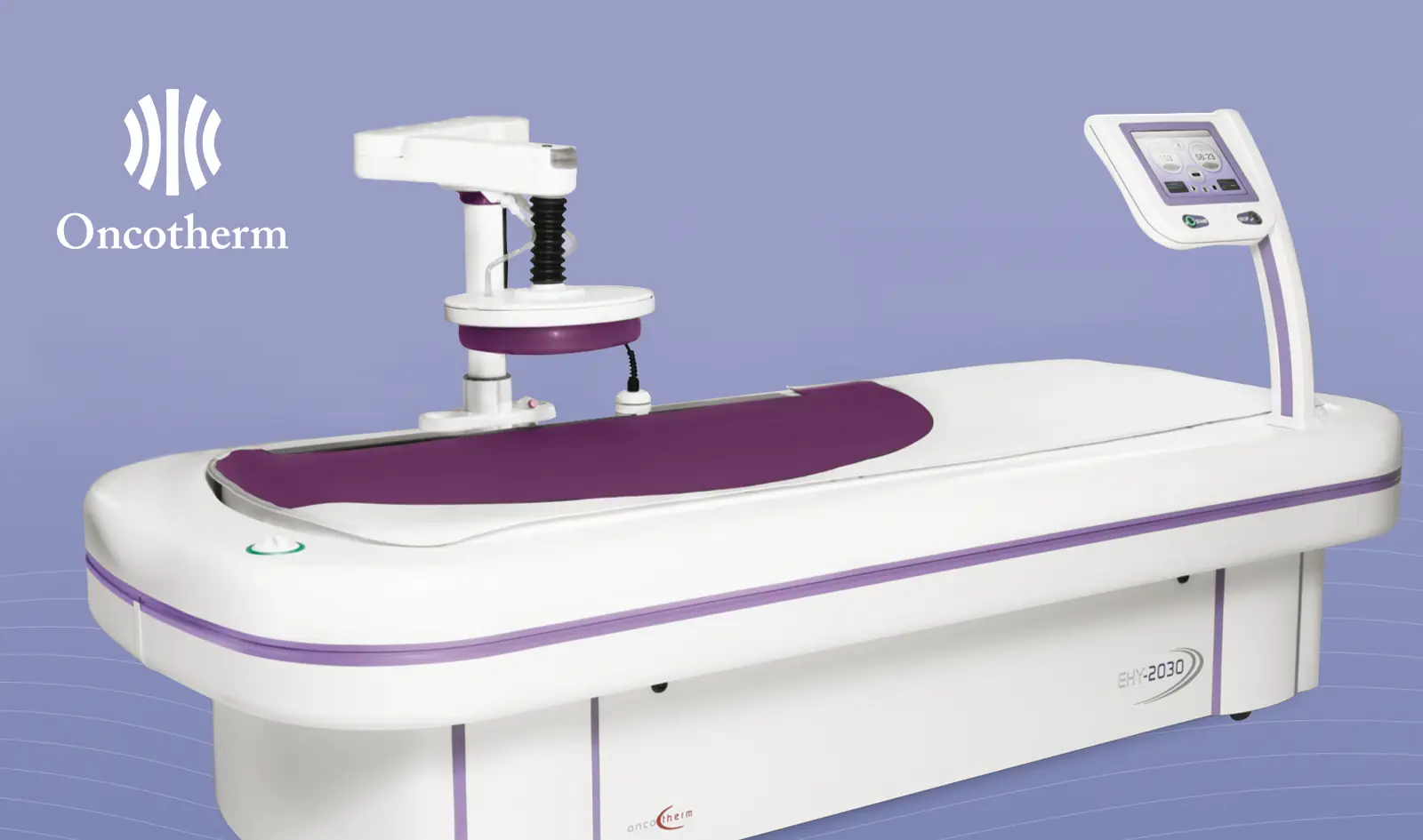
The Evolution of Oncological Hyperthermia
Since 1988, Oncotherm has been dedicated to the research, development, manufacturing, and marketing of advanced cancer treatment systems, utilizing its patented Oncothermia technology for the treatment of malignant tumors. Oncothermia is a modern advancement of traditional hyperthermia—one of the earliest approaches to cancer therapy. It offers a personalized, non-toxic treatment method that uses a modulated electric field to selectively destroy cancer cells while simultaneously promoting the body's natural regulatory and self-repair mechanisms.
Mechanism of Action: How Oncothermia Works
A capacitive setup, consisting of two electrodes, generates a modulated electric field with a carrier frequency of 13.56 MHz. Due to the significantly higher conductivity of malignant tissue compared to healthy tissue, the electric field preferentially concentrates within the tumor lesion area. The combination of deep heating and the focused electric field, as radiofrequency energy penetrates the body, selectively induces programmed cell death (apoptosis) in malignant cells. This process also activates the immune system, leading to a systemic tumor-specific immune response, thereby achieving both local and systemic therapeutic effects.
Differences from Conventional Hyperthermia
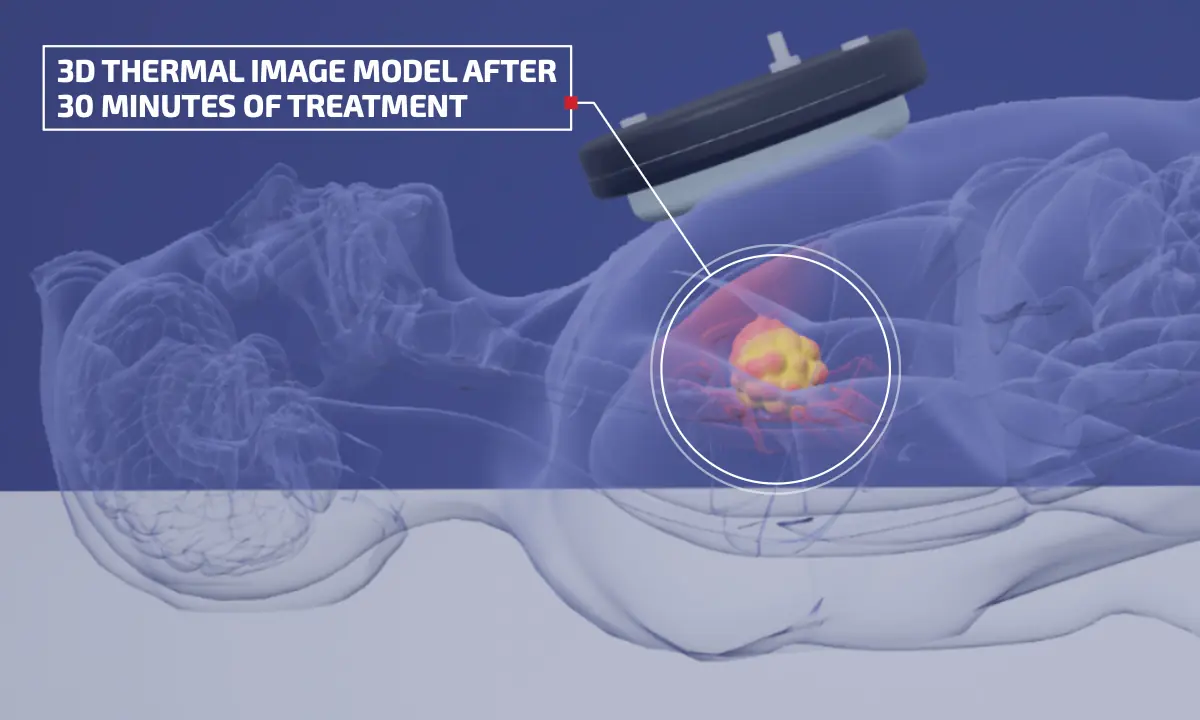
Oncothermia selectively destroys malignant cells by applying a specific dose of energy to achieve the expected physiological effect. While conventional hyperthermia uses 'temperature' as the dose indicator, Oncothermia controls the absorbed magnetic energy within the tumor tissue. Its principle is similar to the dose control method used in radiotherapy. Therefore, Oncothermia's dose calculation is not limited by the complexity of measuring the temperature in the tumor and surrounding tissue. It can determine the energy dose in a simpler and more precise way, superior to the conventional approximation of isothermal heating for heterogeneous tissue.
Oncothermia goes beyond the traditional scope of hyperthermia by employing a controlled and selective energy transfer mechanism. It delivers energy directly to malignant cells through a selective electric field, inducing immunogenic cell death, a form of apoptosis. The entire treatment process is controlled by a modulated electric field passing through the patient's body; the tumor acts like a controllable electronic component in the circuit, becoming an adjustable impedance component in the closed circuit.
Revolutionary Advancements in Oncothermia
- •A new automatic control stepping motor tuning system enables rapid completion of impedance matching, achieving faster and more accurate tuning.
- •Newly developed radiofrequency generator with improved output power.
- •Electronically controlled Smart Electrode Application Arm for easy and precise electrode positioning.
- •User-friendly touchscreen interface allows full control from the beginning to the end of the treatment, while simultaneously monitoring technical parameters.
- •Adoption of replaceable, flexible, and soft electrodes for the Smart Electrode System (SES), allowing for more direct contact with the patient compared to older electrodes.
- •New external design and ergonomic features enhance patient comfort and reduce anxiety.
- •Equipped with a handheld emergency stop switch for the patient, ensuring treatment safety.
- •Built-in integrated patient management system for complete logging and preservation of medical and technical data.
EHY-2030 Specifications
| Mains voltage | AC 110-230V; 50/60Hz |
| RF power output | max. 350 Weff / 800 Wpp |
| Nominal load | 50 Ohm |
| Output carrier frequency | 13.56 MHz |
| Output modulating frequency | Homeostatic time-fractal |
| Weight | 200 kg |
| Dimensions (HxLxW) | 1350 x 2500 x 1150 mm |
| Operating temperature range | +15°C - +30°C |
| Relative air humidity | 20% - 60% (non-condensing) |
| Air pressure | 800 - 1060 hPa |
| Required space | 10 square meters |
| Recommended space | 14 square meters |