What Is Proton Therapy? A Simple Guide to Precision Cancer Treatment
Tech
2025-11-17
Treatment options for cancer are expanding. From surgery and chemotherapy to radiation therapy, each method has its advantages. In recent years, a technique known as Proton Therapy has gained significant attention. Its ability to "target bad cells while sparing good ones" significantly reduces side effects, making the treatment process easier for patients.
1. What Is Proton Therapy?
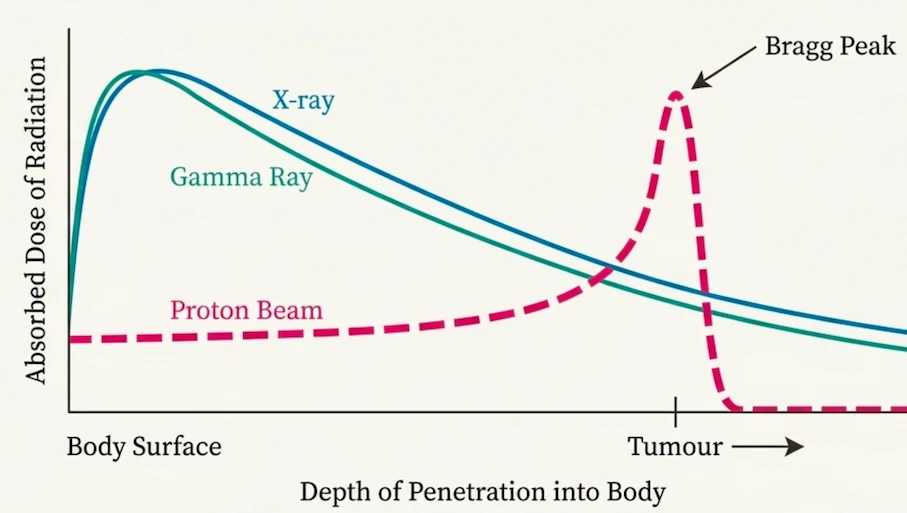
Simply put, proton therapy is a form of precision radiation therapy that uses "protons"—positively charged particles—to attack cancer cells. This differs from traditional X-ray radiation, which passes all the way through the body, affecting healthy tissues along the path. Protons, however, can release all their energy at a precise point after entering the tumor, acting like a "time bomb" to ensure the energy is concentrated within the tumor without damaging the surrounding normal tissue.
This characteristic of "concentrated energy release" is known as the Bragg Peak. In simple terms, as protons penetrate the human body, they release very little energy initially. However, once they reach the specific depth of the tumor, the energy suddenly bursts to destroy the cancer cells completely, and then stops immediately. The healthy cells behind the tumor remain almost unaffected.
2. What Are the Advantages of Proton Therapy?
- Precision targeting that spares healthy cells: Because the energy is highly controlled, proton therapy minimizes damage to healthy tissues.
- Fewer side effects: Traditional radiation therapy can cause fatigue, nausea, or skin burns. Since proton therapy only targets the tumor, these side effects are reduced.
- Especially suitable for children: Children's organs are still developing. While X-ray therapy might affect growth, proton therapy lowers this risk.
- Ideal for difficult-to-treat areas: For tumors in critical areas like the brain, spinal cord, or eyes, proton therapy reduces the risk of functional damage.
3. Which Cancers Are Suitable for Proton Therapy?
While proton therapy is not applicable to all cancers, it is particularly effective for the following:
- Brain and spinal cord tumors
- Head and neck tumors (e.g., Nasopharyngeal carcinoma)
- Lung cancer
- Prostate cancer
- Liver cancer
- Pediatric cancers (e.g., Neuroblastoma, Retinoblastoma)
4. Challenges and Future Development
Proton therapy sounds impressive, but it currently faces some challenges:
- High equipment costs: Building a proton therapy center is extremely expensive, which makes the treatment cost higher.
- Limited availability: There are not many hospitals globally that offer proton therapy, so patients may need to travel abroad for treatment.
- Clinical data is still accumulating: Although there are many success stories, more long-term data is needed to prove its optimal application methods.
The good news is that with technological advancements, proton therapy equipment is becoming smaller and more affordable. It is expected to become more widespread in the future, benefiting more cancer patients.
5. Proton Therapy vs. Traditional Radiation Therapy
| Feature | Proton Therapy | X-ray Radiation Therapy |
|---|---|---|
| Energy Release | Targets only the tumor; does not affect tissue behind it | Passes through the body; affects normal tissue |
| Impact on Healthy Tissue | Low | High |
| Side Effects | Relatively few | Likely more |
| Suitable For | Pediatric cancer; tumors near critical organs | Most types of cancer |
| Equipment & Cost | Expensive equipment; higher treatment cost | Common equipment; lower cost |
Conclusion
Proton Therapy is an innovative cancer treatment that precisely attacks tumors while reducing side effects, making it especially suitable for pediatric patients and tumors located in sensitive areas. However, due to the currently high costs and limited medical resources, patients should discuss with their doctors to evaluate the best treatment plan.
As technology advances, proton therapy is likely to become cheaper and more accessible. If you or someone you know is looking for new options in cancer treatment, proton therapy might be a direction worth considering!